
In other words, this isn’t rare—it’s frequent, and often under-recognized.
Here are some common traits and how they affect day-to-day life:
- A child may hyperfocus on their favorite interest but be unable to shift attention to math class or transition between tasks.
- Difficulty sitting still, fidgeting, interrupting, or talking out of turn, but also being overwhelmed by sensory input (lights, sounds, textures) or changes in routine.
- Trouble with social cues: missing subtle signals, or being unsure how to respond to peers; may desire friendships but struggle to maintain them.
- Executive dysfunction: forgetting instructions, losing track of multiple-step homework tasks, difficulty organizing materials.
- Emotional dysregulation: intense frustration, outbursts, anxiety when sensory or social expectations overwhelm them.
For the family, this can mean long evenings spent helping with homework that drags on, tension over missed work or miscommunication, stress over whether the school system “gets it,” and often worry that their child is simply being “lazy” or “naughty” when in fact they’re working hard with fewer cognitive supports.
Definition
Dyslexia is a specific learning difference characterized primarily by difficulties with accurate and/or fluent word reading and/or spelling. It often involves problems with phonemic awareness (the sounds of language), decoding (turning print into sound), and sometimes silent reading comprehension.
Real-Life Examples
- A child might read slowly, stumbling over simple words, frequently guessing at words rather than decoding them.
- They may reverse letters when writing, omit or add letters, or have difficulty spelling words they hear clearly.
- Reading aloud might feel exhausting, with lots of pauses, re-reading, and loss of meaning over long passages.
- Homework involving reading (history, science, literature) takes much longer, often requiring parent tutoring or help.
Impact on the Family
Families often feel caught between wanting to help and not knowing how. Evenings might be full of frustration: fighting for just one page or paragraph, correcting spelling, helping re-read text, filling in comprehension gaps. Siblings sometimes get overlooked. Confidence can erode for the student; they may experience shame or embarrassment about reading in front of peers; school may become a source of anxiety. Families may spend time and money on specialized tutors or intervention programs that help in some areas, but don’t fully erase the struggle.
Typical Interventions for AuDHD and Dyslexia
When children show traits of ADHD, autism, and/or dyslexia, schools and families often try one or more of the following:
- Medication (for ADHD symptoms), which can help with attention, impulse control, and sometimes hyperactivity.
- Speech/language therapy (especially for dyslexia) to build phonemic awareness, decoding skills, and comprehension.
- Behavioral therapy and/or occupational therapy especially for sensory sensitivities, routines, emotional regulation.
- Classroom accommodations such as extra time on tests, quieter settings, visual supports, breaking tasks into smaller steps.
- Group or One-on-one tutoring in reading, writing, or subject content to try to make up missed content or strengthen weak academic skills.
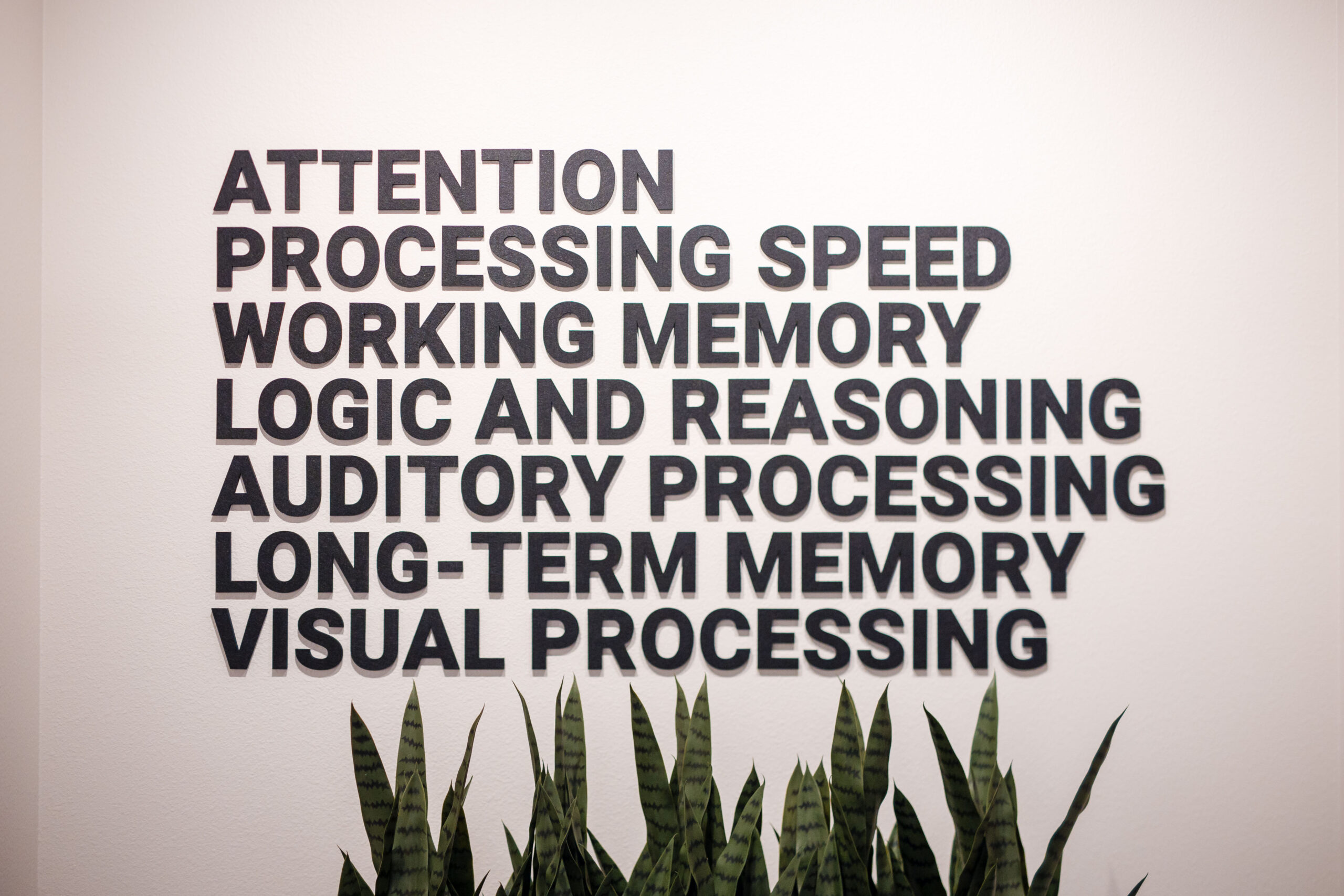
These interventions can help quite a bit—and often are essential parts of a support plan. But they frequently address symptoms or surface-level challenges rather than root causes of learning struggles—namely, weaknesses in underlying cognitive skills like working memory, processing speed, attention, auditory/visual processing, and reasoning.

Here’s how:
- It improves attention span and the capacity to focus in distracting environments.
- It builds working memory so students can follow multi-step instructions without dropping pieces.
- It speeds up processing so reading, writing, or doing mental math feels less laborious.
- It enhances reasoning, so comprehension, problem-solving and adapting to new tasks become more automatic.
Because the underlying skills are foundational to how a student thinks, remembers, processes, and acts—not just what they’re being taught—brain training leads to more generalized improvements. Students get stronger across subjects (and cogintive skills), not just in the ones being tutored.
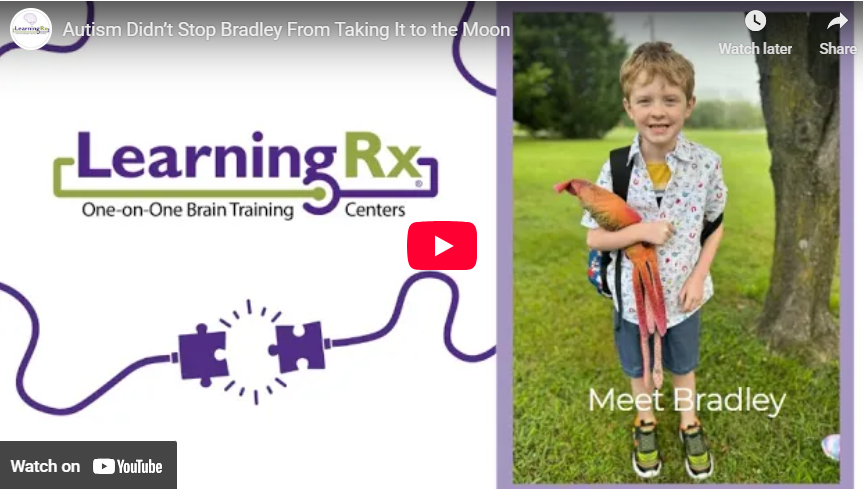
—Caitlyn S., Bradley’s mom
The numbers tell a powerful story about what’s possible with LearningRx brain training:
- ADHD: Children and teens with ADHD gained an average of 26 IQ points and showed statistically significant improvements across all measured cognitive skills—particularly in working memory, processing speed, and long-term memory—after LearningRx one-on-one brain training.
- Autism Spectrum Disorder (ASD): Clients with autism achieved an average 11-point gain across core cognitive skills (including attention, auditory processing, and logic & reasoning), with parents reporting improvements in confidence, cooperation, and daily functioning.
- Dyslexia: Students with dyslexia saw an average 13-point IQ increase and multi-year reading gains, including a 5.7-year improvement in phonological awareness and a 3.2-year overall gain in reading skills after completing the ReadRx program.
These results aren’t just numbers—they represent real changes in attention, confidence, and daily life for students who once felt left behind. At LearningRx, we’ve seen measurable gains across hundreds of clients with ADHD, autism spectrum disorder, and dyslexia. Our research shows that when you strengthen the brain’s core learning skills, students not only improve their test scores—they discover new confidence, independence, and joy in learning.
Explore the Research Behind the Results
At LearningRx, we’ve worked with thousands of students with ADHD, autism, and dyslexia—as well as many who simply struggle with attention, reading, or memory but don’t have a formal diagnosis. What we’ve learned is that brains can get stronger when they are given the right kind of training. Our programs are designed to meet each learner where they are, strengthening the underlying skills that make learning possible. Through one-on-one training, personalized goals, and research-based methods, we help students build the focus, memory, and reasoning abilities they need to succeed in school and in life—regardless of labels or learning differences.
Putting all this together points to why LearningRx’s model is especially powerful for AuDHD and dyslexia:
- Starts with a detailed assessment of each student’s cognitive strengths and weaknesses.
- Tailors exercises in a one-on-one setting so that the child works on their weakest skills while building confidence.
- Progresses in steps: what’s challenging but achievable, then more complex, so the brain is nudged but not overwhelmed.
- Uses repetition, multi-modal (auditory, visual, reasoning), speed and accuracy—all critical because in these populations many skills are slow, weak, or inconsistent.
- The result tends to be more generalizable improvements—not just in reading or focus, but in school performance, emotional regulation, and self-esteem.